

They do a great job of explaining the subject in their SEO Starter Guide and the key elements of SEO with their Search Essentials outline. Both are excellent resources for beginners wanting to learn more about SEO — from the source.
This article provides an overview of the core parts that make up SEO, how AI search (AIO) is changing SEO in 2026, pro tips from the experts, SEO basics you can implement right now, and more.
If you’d rather have a partner handle the heavy lifting, you can always explore my SEO services to see how I help businesses build and maintain a stronger search foundation.
SEO Basics You Can Start On Right Now
If thinking about SEO feels overwhelming, take a breath. You don’t have to rebuild your entire digital house this week. Start by shoring up a few essentials so your foundation, structure, and roof are strong enough for both traditional search and AI-driven results.
Here are practical steps you can take right away.
1. Google yourself like a customer
Before you touch your website, see what your ideal buyer sees.
- Search for a few phrases your customers might use (not just “SEO” or “remodeling,” but things like “kitchen remodeler near me” or “how to move an office across town”).
- Notice who shows up: competitors, directories, articles, videos, AI Overviews, People Also Ask questions.
- Write down:
- Which competitors appear over and over
- The common questions and topics that keep popping up
- Any AI summaries or featured snippets where you’d love to see your brand
This gives you a real-world benchmark for the “neighborhood” your digital house is sitting in.
Pro Tips:
Questions to consider when researching your competitors
- What keywords are they ranking for that are relevant to your business
- What type of marketing are they doing?
- Are there other competitors that are showing up or bidding on their name for PPC?
Use what you have
Look at the “people also asked” section and the relevant words that come on your search results page
SEO Pro Tips for Lead Gen:
Feed the top and middle of the funnel
Focus on the buyer’s journey/sales funnel. With a heavy background in sales, you’ll probably see me write this more than once. Everyone wants bottom of the funnel leads, but that’s just not a realistic expectation. Especially if you’re in the B2B space. Over 92% of B2B will do heavy research and qualify potential vendors before they even contact you. Just look at your own buying habits, would you pay for something (over $50) without looking at the reviews? For B2B: 10x more since generally it’s their job or reputation on the line… if you can’t tell I’m very passionate about this. I could talk about it all day!
Create content that targets each stage of the (initial) buying process – awareness, consideration and decision. Talk to your sales team and find out what’s important at each stage. Make sure you’re also looking at your different buyer personas. Tailored content is key to turning visitors into prospects and ultimately customers. Please note that there is a different strategy for the second part of the journey, which focuses on KEEPING the customer.
REMEMBER: You don’t have to do everything at once. If you start by tightening up your foundation, updating a couple of key pages and answering real customer questions you’ll be in a much stronger position to benefit from both SEO and AIO.
If you’re not sure where to start or what to prioritize, we can map it out together. Book a quick SEO + AIO strategy call and I’ll help you turn this into a simple, prioritized plan for your business.
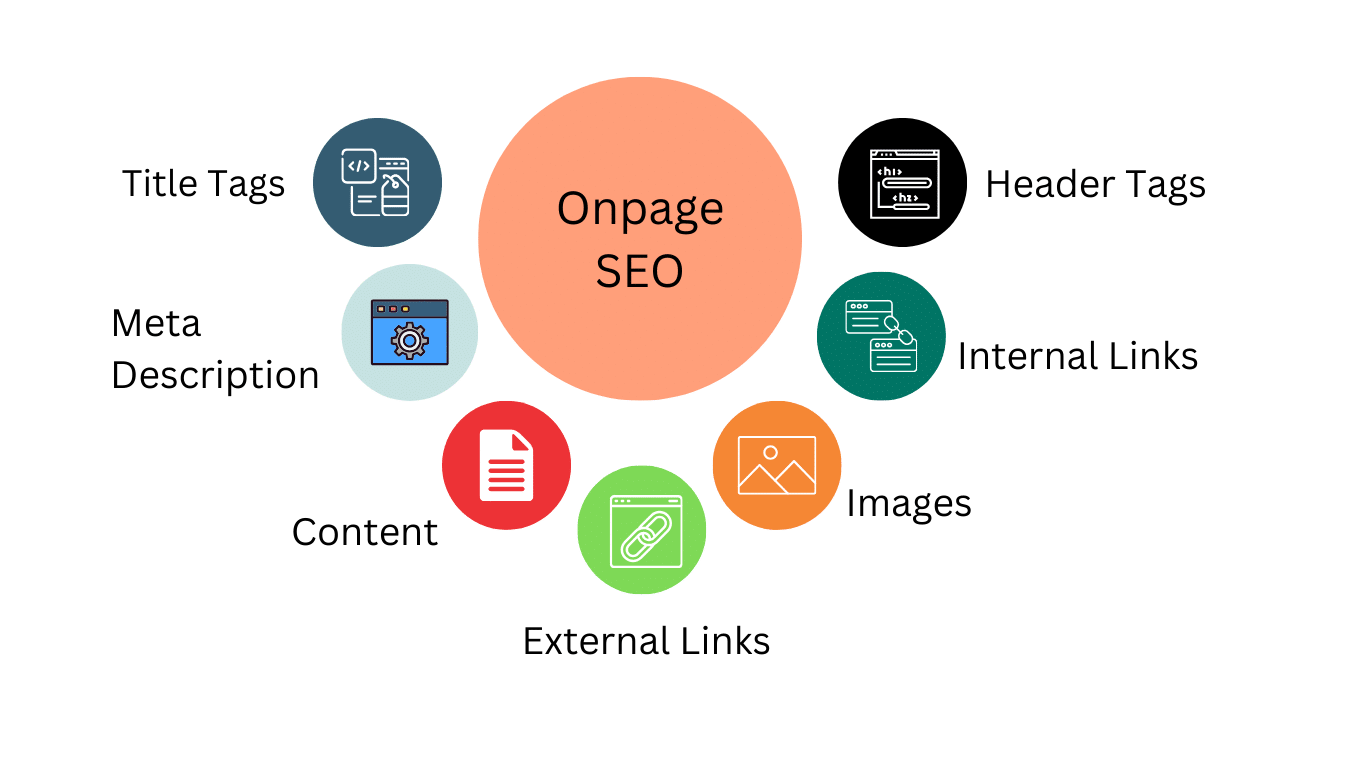
There are several factors that contribute to on-page SEO
Key Aspects of On-Page SEO
Content Quality: Unique and relevant content is vital for engaging visitors and search engines.
Title Tags and Meta Descriptions: Craft compelling titles and descriptions to improve click-through rates.
Header Tags and Keyword Optimization: Use headers and keywords effectively to enhance readability and relevance.
Internal Linking: Helps distribute page authority and guide visitors through your site.